Hypoallergenic Dog Breeds: Complete List and Characteristics
Updated January 2026 — by Charlotte, Doodle breeder specializing in the Île-de-France region
Contrary to popular belief, it’s not dog hair that triggers allergies, but a protein found in their saliva, urine, and dead skin cells (Fel d 1 for cats, Can f 1 for dogs). So-called “hypoallergenic” breeds don’t produce less of this protein, but they shed far less hair, which limits the spread of allergens in the environment.
Top 10 breeds recommended for people with allergies
1. Australian Labradoodle
The Australian Labradoodle is one of the most reliable hypoallergenic breeds, notably because its coat traits have been stabilized over 40 years of rigorous selection. Its curly or woolly coat traps allergens instead of dispersing them into the air. A good option for families with allergic children.
- Coat: curly or woolly, very little shedding
- Size: Miniature (35-45cm), Medium (45-55cm), Standard (55-65cm)
- Character: gentle, intelligent, balanced, excellent therapy dog
2. Bernedoodle
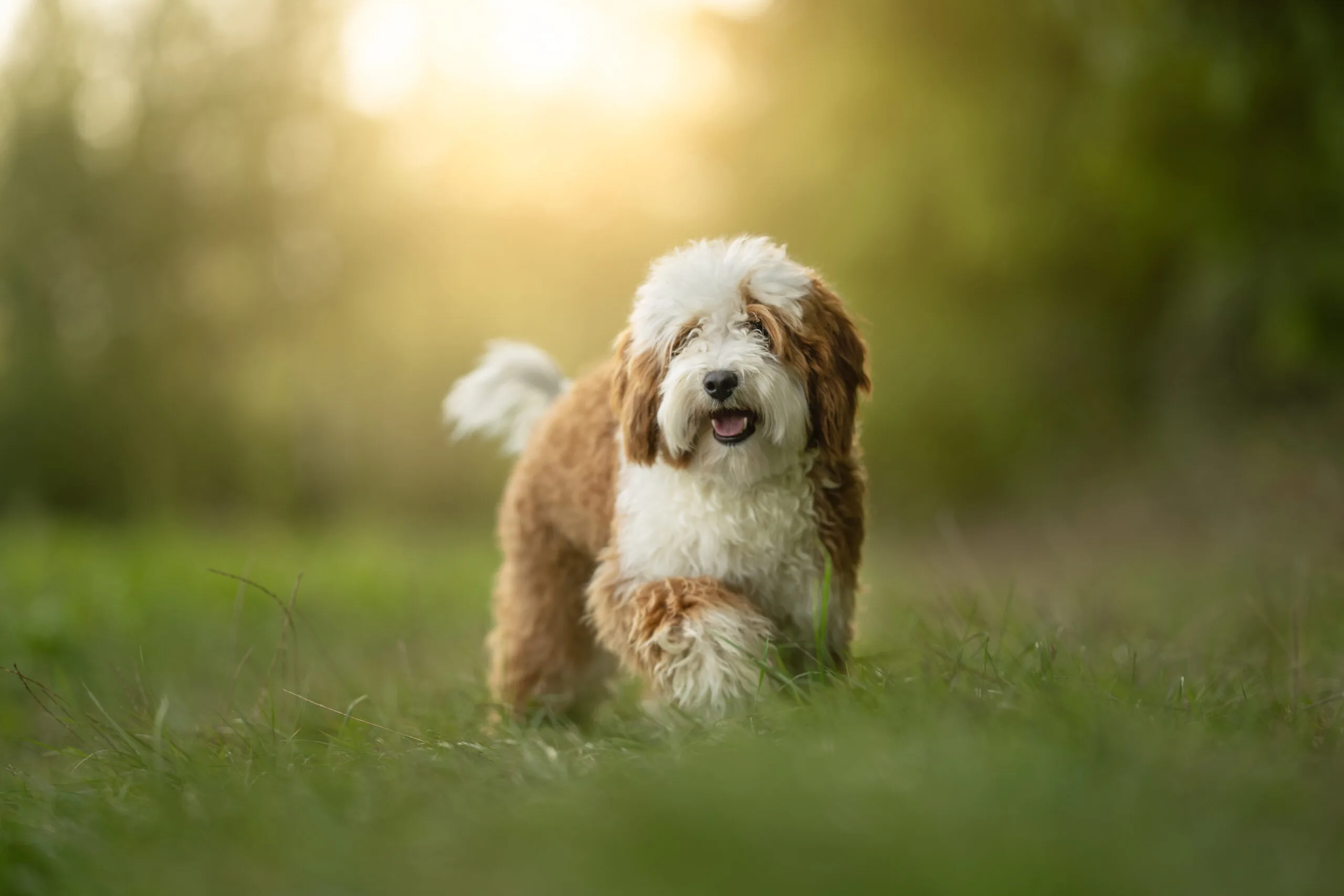
The Bernedoodle inherits the Poodle coat that makes this cross popular with people who have allergies. Unlike the purebred Bernese Mountain Dog (heavy shedder), the F1B or multigenerational Bernedoodle has a curly, very-low-shedding coat. He’s particularly appreciated for his affectionate, calm temperament.
- Coat: wavy to curly, regular grooming required
- Size: Toy (3-10kg), Mini (10-18kg), Standard (25-40kg)
- Character: loyal, affectionate, calm at home
3. Poodle (Toy, Miniature, Medium, Standard)
The Poodle is the historic benchmark for hypoallergenic dogs. It barely sheds at all. Its curly coat traps everything, which requires grooming every 6-8 weeks. Extremely intelligent (ranked the world’s 2nd most intelligent breed after the Border Collie).
4. Bichon Frise
The Bichon Frise is one of the dogs best suited to allergy sufferers thanks to its curly, very-low-shedding coat. Small size (3-5kg), cheerful and affectionate character, excellent with children.
5. Maltese
The Maltese has a long, silky coat that barely sheds. Despite its long hair, it’s considered hypoallergenic. Weight: 2-3 kg. Excellent for apartments.
6. Schnauzer
The Schnauzer (Miniature, Standard, Giant) has a double coat with very little shedding. Its wiry coat is hypoallergenic across all three sizes. It requires regular grooming but remains an excellent option for allergic families looking for a more “classic” dog.
7. Goldendoodle
The Goldendoodle (Golden Retriever + Poodle) is hypoallergenic in F1B and multigenerational lines, but be careful: F1s (first generation) can have a variable coat. Choose a breeder who specifically selects for a curly coat.
8. Coton de Tulear
This Madagascar breed has a cottony coat with very little shedding. Small size (4-6kg), gentle and playful temperament. Not widespread in France but its hypoallergenic qualities are recognized.
9. Lagotto Romagnolo
Originally a truffle-hunting dog, the Lagotto has a dense curly coat that doesn’t shed. Very active, intelligent, and affectionate. An original option for allergy sufferers who like a dog with character.
10. Basenji
The Basenji is unique: it grooms itself like a cat, produces very few allergens, and doesn’t bark (it yodels). Very short coat, minimal upkeep. Independent character: better suited to experienced owners.
How to test your allergy before adopting?
- Consult an allergist for a full assessment (skin test or Can f 1 blood test)\
- Visit a breeder and spend 1-2 hours with adult dogs of the target breed\
- Watch for symptoms within 24-48 hours after the visit\
- If possible, have a dog of the breed stay with you for a week before adopting
At Ouidoodle, we invite you to meet our adult Bernedoodles and Australian Labradoodles before making any reservation, to check your tolerance.
FAQ — Hypoallergenic dogs
Does a 100% hypoallergenic dog exist?
No, no dog is 100% free of allergens. “Hypoallergenic” means less allergenic, not zero risk. That said, the breeds listed above are noticeably better tolerated by the vast majority of people allergic to dogs.
Is the Bernedoodle better for allergy sufferers than the Goldendoodle?
Both can be hypoallergenic if the parents are well selected. The key is the generation: an F1B or multigenerational dog is more reliable than an F1.
Is coat maintenance complicated for these breeds?
Yes, curly coats require brushing 3-4 times a week and a visit to the groomer every 6-8 weeks to prevent mats. That’s the price of hypoallergenicity.