Is the Bernedoodle Really Hypoallergenic?
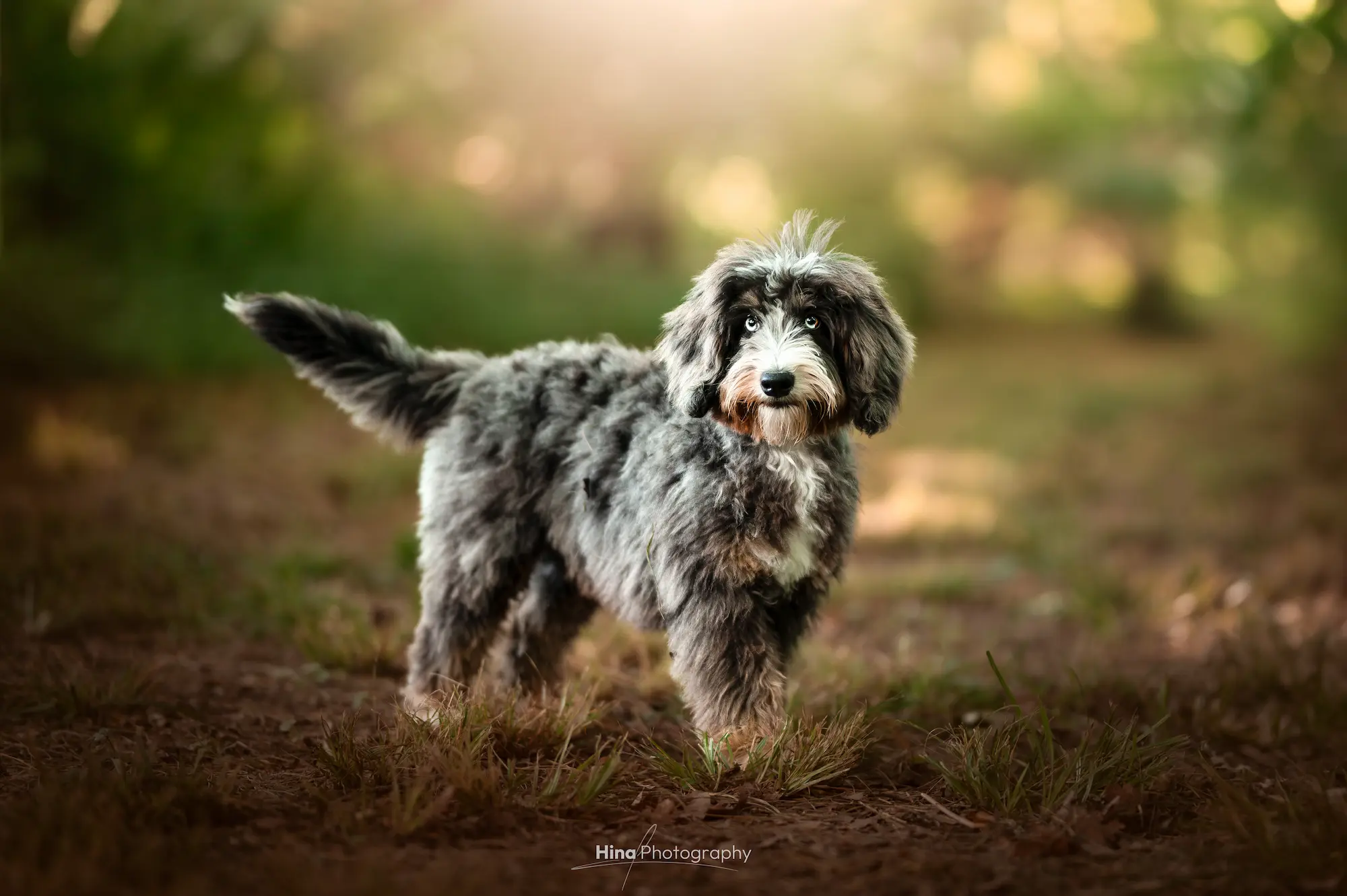
The Bernedoodle is often praised for its hypoallergenic coat, a trait inherited from one of its parents, the Poodle. But how much of that holds up in practice? Here’s what the term “hypoallergenic” actually means, how it applies to the Bernedoodle specifically, and how allergy sufferers can decide whether it’s a good fit, plus tips for minimizing allergic reactions and keeping a healthy home for you and your companion.
To learn more about the Bernedoodle, you can visit our website: our Bernedoodle breeding program
What is a hypoallergenic dog?
The term “hypoallergenic” is often misunderstood. Contrary to what many people think, no dog is completely free of causing allergies. Allergic reactions in humans are generally caused by proteins present in an animal’s saliva, urine, and dead skin cells (dander). These proteins can spread through the air or cling to the coat and surfaces.
A hypoallergenic dog is therefore a breed or cross that produces fewer of these allergens or sheds less, thus limiting the spread of dander in the environment. Poodles, for example, have a curly coat that traps dander, which makes them popular with people who have allergies.
It’s important to note that the term “hypoallergenic” doesn’t guarantee a total absence of allergy symptoms. Some particularly sensitive people may still react, even to a dog described as hypoallergenic.
To learn more about hypoallergenic dogs: https://www.zooplus.fr/magazine/chien/adopter-un-chien/chiens-hypoallergeniques
The Bernedoodle’s coat: a key factor
The Bernedoodle inherits its coat from its parents, the Bernese Mountain Dog and the Poodle. This means its coat can vary considerably from one individual to another. Here are the main coat textures found in the Bernedoodle:
Curly coat
Inherited mainly from the Poodle, this coat type traps dander and hair, which can reduce the spread of allergens in the environment. This is the most sought-after coat type for people with allergies.
Wavy coat
A mix of both parents, it is less hypoallergenic than the curly coat but still sheds less than that of the Bernese Mountain Dog. This coat type works well for families who want a balance between upkeep and appearance.
Straight coat
Closer to that of the Bernese Mountain Dog, it sheds more and is therefore less suitable for allergy sufferers. This coat type also requires more frequent maintenance to prevent dander buildup.
Factors influencing allergic reactions
Even with a curly-coated Bernedoodle, several factors can influence the level of allergic reactions:
Individual allergen production
Each dog produces different amounts of allergenic proteins. Some Bernedoodles may naturally produce less of these proteins, making them better suited to allergy sufferers. It’s therefore possible for two dogs from the same litter to have different effects on a sensitive person.
Coat maintenance
Regular grooming, including brushing and bathing, helps reduce dander and keep the coat clean. This can decrease the amount of allergens present in your home. A bath every two weeks with a suitable shampoo can greatly improve the situation.
Home environment
Allergen buildup can be minimized through measures such as:
- Using a vacuum cleaner with a HEPA filter.
- Frequently washing textiles (rugs, cushions, etc.).
- Setting up dog-free zones, such as bedrooms.
- Regularly airing out rooms to avoid allergen concentration in the air.
Individual reaction
Allergies vary considerably from person to person. Some people can tolerate a Bernedoodle without any problem, while others will react even to a dog considered hypoallergenic. It’s important to test your sensitivity before adopting a dog, by spending several hours in contact with it.
Studies and testimonials: is the Bernedoodle effective against allergies?
Scientific study results
Few scientific studies have focused specifically on the Bernedoodle. However, research on other hypoallergenic breeds, such as the Poodle, shows that these dogs do produce fewer allergens in the environment. This does not, however, guarantee a total absence of symptoms in sensitive people.
A study conducted in 2011 by Utrecht University showed that allergen levels in homes with so-called hypoallergenic dogs were not significantly lower than in homes with non-hypoallergenic dogs. This highlights the importance of cleaning and maintenance practices, beyond the choice of breed.
Owner testimonials
Many allergic owners report positive experiences with their Bernedoodle, particularly those with a curly coat. Some note a significant improvement in their symptoms compared to exposure to other breeds.
Others, however, report that despite all precautions, their sensitivity persists. These testimonials underscore the importance of spending time with a dog before adopting it to assess your tolerance. Experiences can vary even within the same family.
Tips for allergic people wishing to adopt a Bernedoodle
If you’re allergic but considering adopting a Bernedoodle, here are some steps to follow to maximize your chances of success:
Meet the dog before adopting
Spend time with the puppy or adult dog you wish to adopt. This will let you check whether you experience symptoms in its presence. Some breeders allow extended visits or trial periods to ensure compatibility.
Choose a responsible breeder
An experienced breeder can guide you toward puppies with a coat more likely to be hypoallergenic. Don’t hesitate to ask questions about the genetics and lineage of the parents. Breeders who know their dogs well will be able to steer you toward a suitable companion.
Put preventive measures in place
- Install an air purifier to reduce airborne allergens.
- Regularly wash your dog with a hypoallergenic shampoo.
- Limit your dog’s access to certain sensitive areas of your home, such as bedrooms or sofas.
- Use washable covers for furniture.
Consult an allergist
A healthcare professional can help you assess your level of allergy and put together a plan for living with a dog. Treatments such as antihistamines or immunotherapy may also be considered.
Opt for professional grooming
A professional groomer will know how to effectively maintain your Bernedoodle’s coat and reduce the amount of allergens it releases. This can be an excellent solution for people who have little time to devote to grooming.
Indeed, the Bernedoodle requires rigorous, professional grooming: https://nicksbeard.com/fr/a-quelle-frequence-faut-il-toiletter-un-bernedoodle/
Conclusion: is the Bernedoodle really hypoallergenic?
Although the Bernedoodle is often presented as a hypoallergenic breed, it’s important to understand that this trait depends on many factors, including coat type, individual allergen production, and the maintenance measures put in place. For some allergic people, a Bernedoodle can be an excellent compromise, particularly if it has a curly coat.
However, no dog is entirely free of causing allergies. Before adopting, take the time to assess your needs, your sensitivities, and your ability to maintain a suitable environment. With the right precautions, the Bernedoodle could become a loyal and affectionate companion, even for allergic people.
Every situation is unique. If you’re ready to invest time in grooming and try solutions to minimize allergens, the Bernedoodle could be the right dog for you. For maximum peace of mind, don’t hesitate to consult experts and talk with other owners before making your decision.