
Bernedoodle Breeding in France: Everything You Need to Know Before Adopting
Introduction
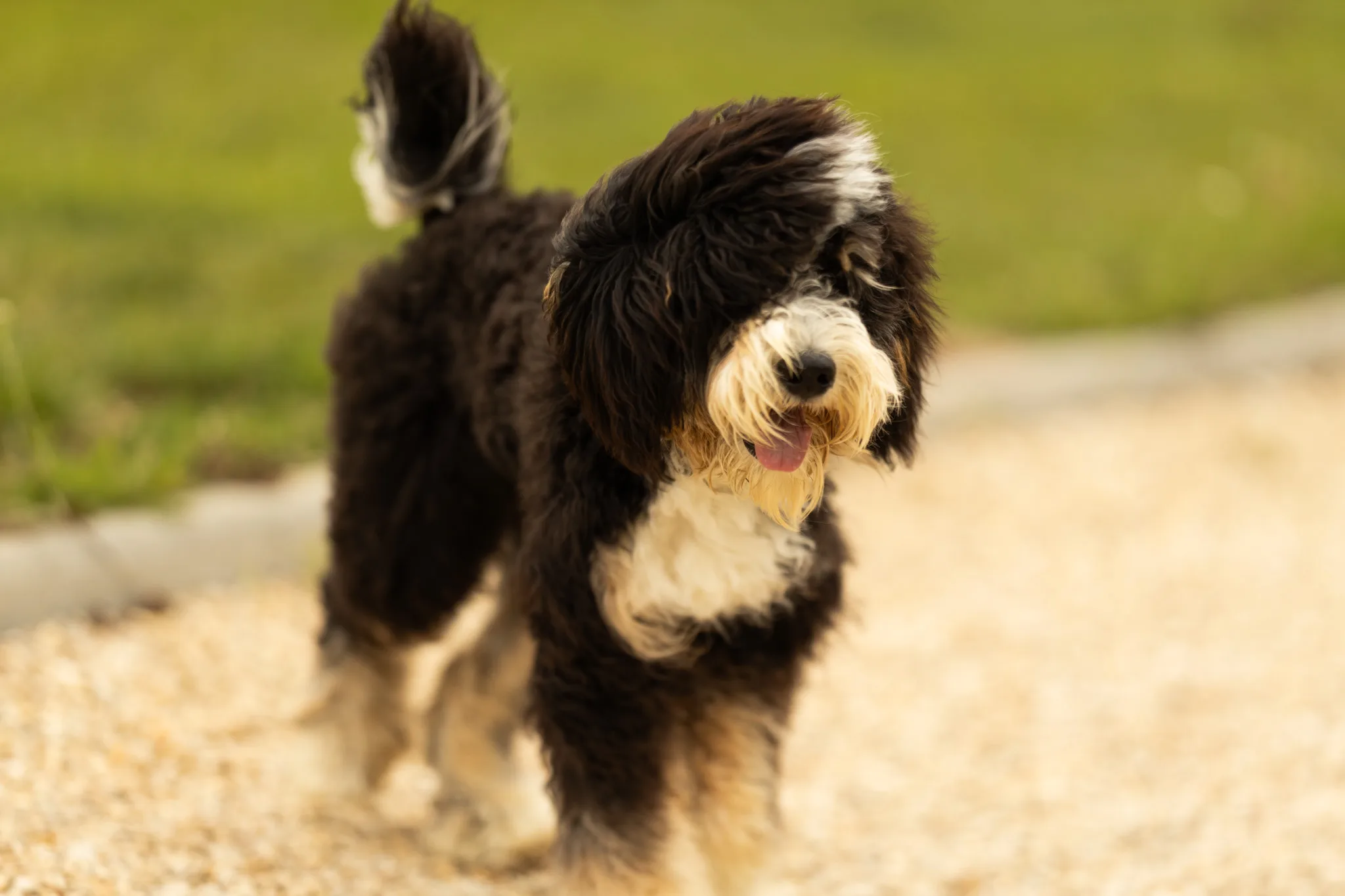
The Bernedoodle is a hybrid dog resulting from crossing the Bernese Mountain Dog with the Poodle, loved for its affectionate temperament, its intelligence, and its hypoallergenic coat. Bernedoodle breeding in France is still a fairly young scene, which makes choosing the right breeder even more important. Here’s what to look for before adopting.
1. What is a Bernedoodle?
The Bernedoodle is a dog designed to combine the best traits of the Bernese Mountain Dog and the Poodle. It’s known for:
- Its intelligence and fast learning ability,
- Its affectionate and sociable character,
- Its wavy or curly coat, often hypoallergenic.
a) Origin of the Bernedoodle
The Bernedoodle was developed in the United States and Canada to create a family dog combining the sturdiness and gentleness of the Bernese Mountain Dog with the intelligence and low-allergen coat of the Poodle.
b) Physical characteristics
- Size: Variable depending on the cross (standard, medium, miniature).
- Weight: From 10 to 40 kg depending on size.
- Life expectancy: 12 to 15 years.
2. Bernedoodle character
The Bernedoodle is a balanced, affectionate, and playful dog. It’s known for being loyal to its family and particularly sociable with children and other animals. Its intelligence makes it an easy dog to train; it’s always best to opt for positive, reward-based training.
The Bernedoodle is a dog that doesn’t cope well with being alone, so we recommend to families a maximum of 2 full days of absence per week (7h/day).
3. Bernedoodle exercise needs
The Bernedoodle needs moderate to intense exercise depending on its build. It loves walks, games, and mental training sessions. A minimum of one hour of activity per day is recommended to prevent boredom and promote its well-being.
4. The Bernedoodle and children
The Bernedoodle is an excellent companion for families with children. Its patient, playful temperament makes it a great partner for the youngest ones. As with any breed, supervision of interactions with young children is recommended.
5. The Bernedoodle in an apartment
Although the Bernedoodle can adapt to apartment life, it’s preferable for it to have outdoor space to let off steam. A stimulating environment and regular outings are essential to ensure its well-being in an urban setting.
It is therefore possible to have a Bernedoodle in an apartment, provided you can take it out between 1h30 and 2 hours a day and offer it exercise walks where it can play, run, and interact with other dogs.
The mere presence of a garden is also not enough to make a Bernedoodle happy; indeed, it needs presence and stimulation above all.
6. The different Bernedoodle sizes
The Bernedoodle comes in several sizes:
- Standard: 55-70 cm at the withers, 25-40 kg.
- Medium: 45-55 cm at the withers, 15-25 kg.
- Miniature: 30-45 cm at the withers, 10-15 kg.
7. The different Bernedoodle crosses
The Bernedoodle can come from several generations of crosses:
- F1 (first generation): direct cross between a Bernese Mountain Dog and a Poodle.
- F1B: cross between an F1 Bernedoodle and a Poodle, which enhances the hypoallergenic coat.
- F2 and F2B: cross between two F1 Bernedoodles or between an F1 Bernedoodle and an F1B Bernedoodle.
- Multigenerational: Bernedoodle from several generations of Bernedoodles, which gives more consistent coat and temperament.
8. Why choose a Bernedoodle breeder in France?
Choosing a French breeder allows you to:
- Have rigorous monitoring of the line and health of the puppies,
- Get a puppy that is socialized and used to different environments,
- Avoid the risks associated with importing puppies of uncertain origin.
- Choose your puppy at 9-10 weeks rather than after 4 months, since for any import from another country you must wait 4 months because the puppy must be vaccinated against rabies and then undergo a 21-day quarantine
- Come meet and choose your puppy at the breeding facility and see the future parents of your puppy
9. How to choose a Bernedoodle breeder in France
a) The breeder’s transparency and ethics
A good breeder should:
- Allow you to visit their facility and meet the puppies’ parents (in our breeding program, visits are only for choosing a puppy from a litter or as part of an adoption motivated by a deposit).
- Provide veterinary follow-up with health tests.
- Give advice on the dog’s training and care.
- Follow up with you after adopting the puppy to help you welcome it.
b) The health of the puppies
A serious breeder tests their breeding dogs for:
- Hip and elbow dysplasia
- Hereditary genetic diseases, via Embark for example
c) Socialization of puppies
A well-socialized puppy adapts more easily to its new environment. The breeder should expose it to different sounds, situations, and interactions before adoption. The puppy should also be familiar with everyday household sounds as well as outdoor sounds.
10. The different Bernedoodle breeders in France
To find a serious breeder, check that they carry out genetic tests, allow visits, and provide post-adoption follow-up.
Contact Ouidoodle for your next Bernedoodle
11. Cost and commitment
A quality Bernedoodle costs on average between 3,500 and 5,000 euros, depending on its size and lineage.
Adopting a Bernedoodle means committing to:
- A commitment of 12 to 15 years,
- Regular veterinary expenses (vaccines, deworming, sterilization, etc.),
- Daily time for training and attention.
Conclusion
Choosing a Bernedoodle breeder in France ensures a healthy, well-socialized puppy. Before adopting, it’s essential to find out about the breeding conditions, the health tests carried out, and the training advice provided.
If you’d like to adopt a Bernedoodle, take the time to compare breeders and ask all your questions before making your choice!