What is an Australian Mountain Doodle?
The Australian Mountain Doodle — often shortened to AMD — comes from crossing a Miniature American Shepherd with a Bernedoodle. Its genetic background therefore comes down to three breeds: the Bernese Mountain Dog, the Australian Shepherd — the Miniature American Shepherd is a line drawn from it — and the Poodle. There is no Labrador and no Cocker Spaniel in this cross.
What breeders are after: a dog that is easy to live with, carrying the tricolour and merle coats that come from both sides, and with enough drive to come along outdoors. It is a recent cross, recognised by no kennel club, and litters are still less uniform than in an established breed.
Where the breed comes from
The Australian Mountain Doodle grew out of the Bernedoodle, by adding Miniature American Shepherd to a Bernedoodle already in place. The intention fits in one sentence: to get an Aussiedoodle with less energy or — taking the same problem from the other end — a Bernedoodle that is sportier and easier to train.
Each parent pulls its own way: the Bernese Mountain Dog steadies the dog and hands down the tricolour coats, the Australian Shepherd brings movement, a willingness to work and the light eyes, the Poodle the coat texture. Depending on how the shares fall, two puppies from the same litter can turn out quite different.
This is a young cross with no official standard. What tells you a breeder is serious is therefore the parents: their health testing, their character, and the way the puppies are raised.
Colours, eyes and coat texture
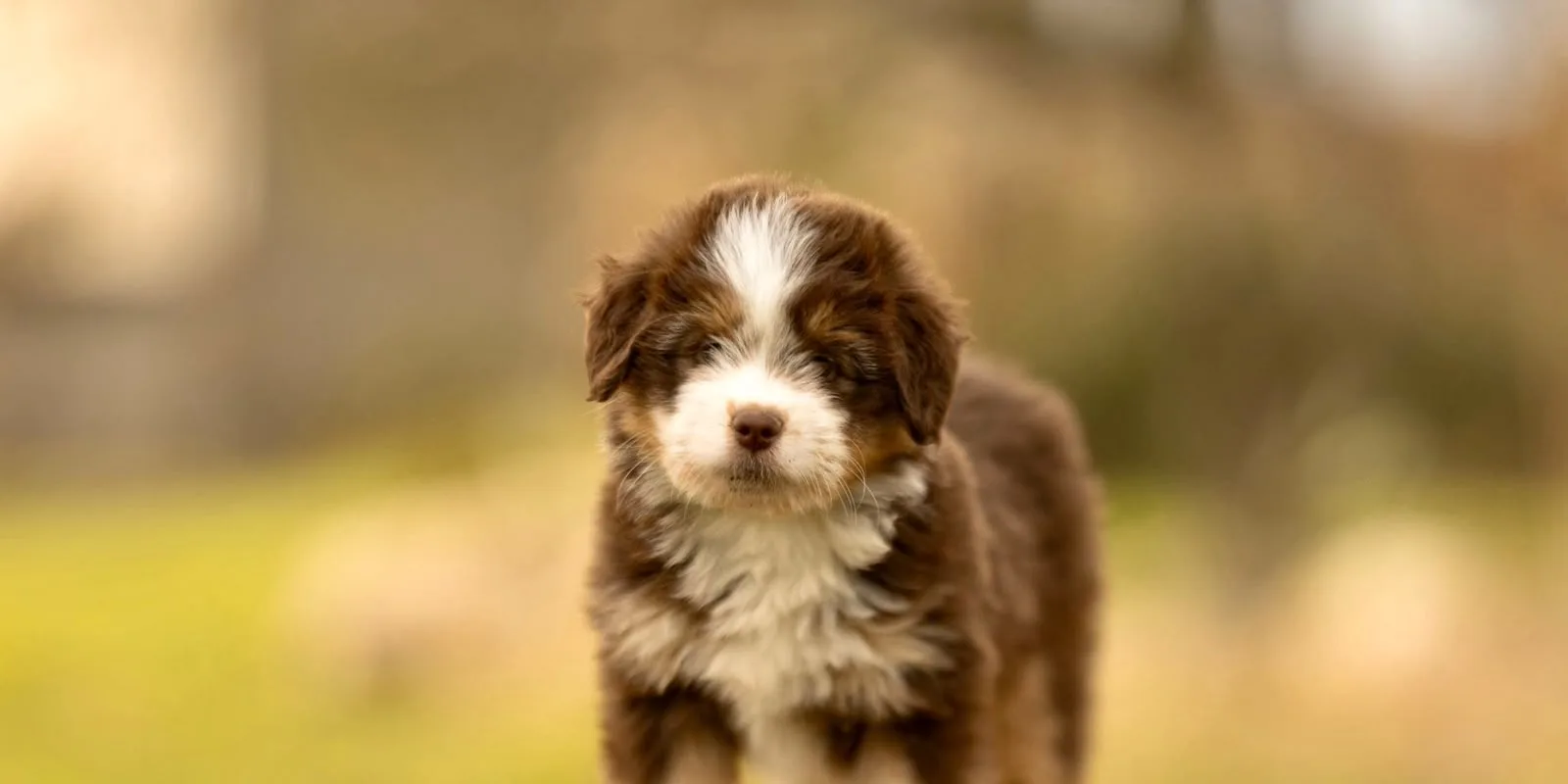
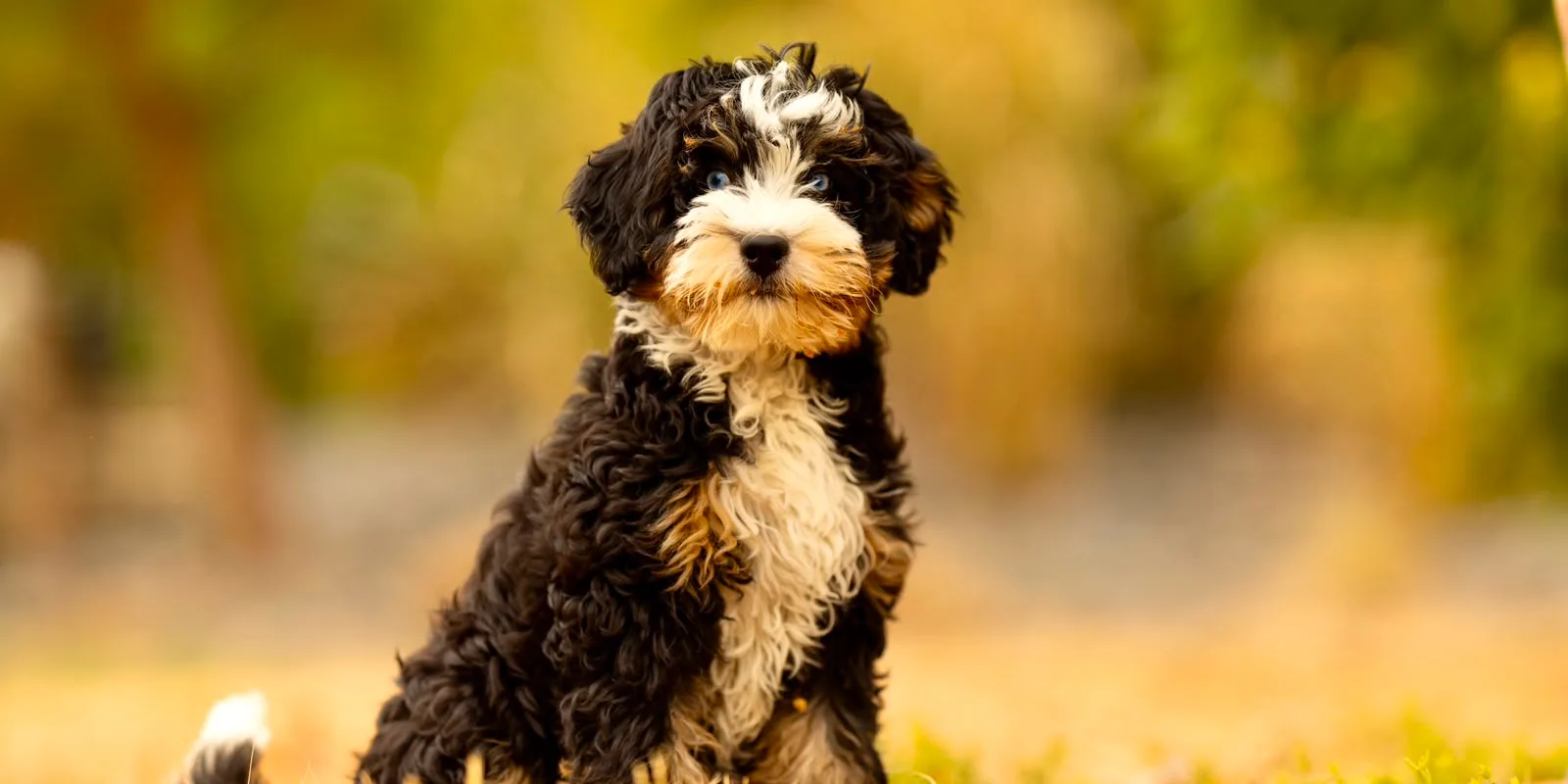
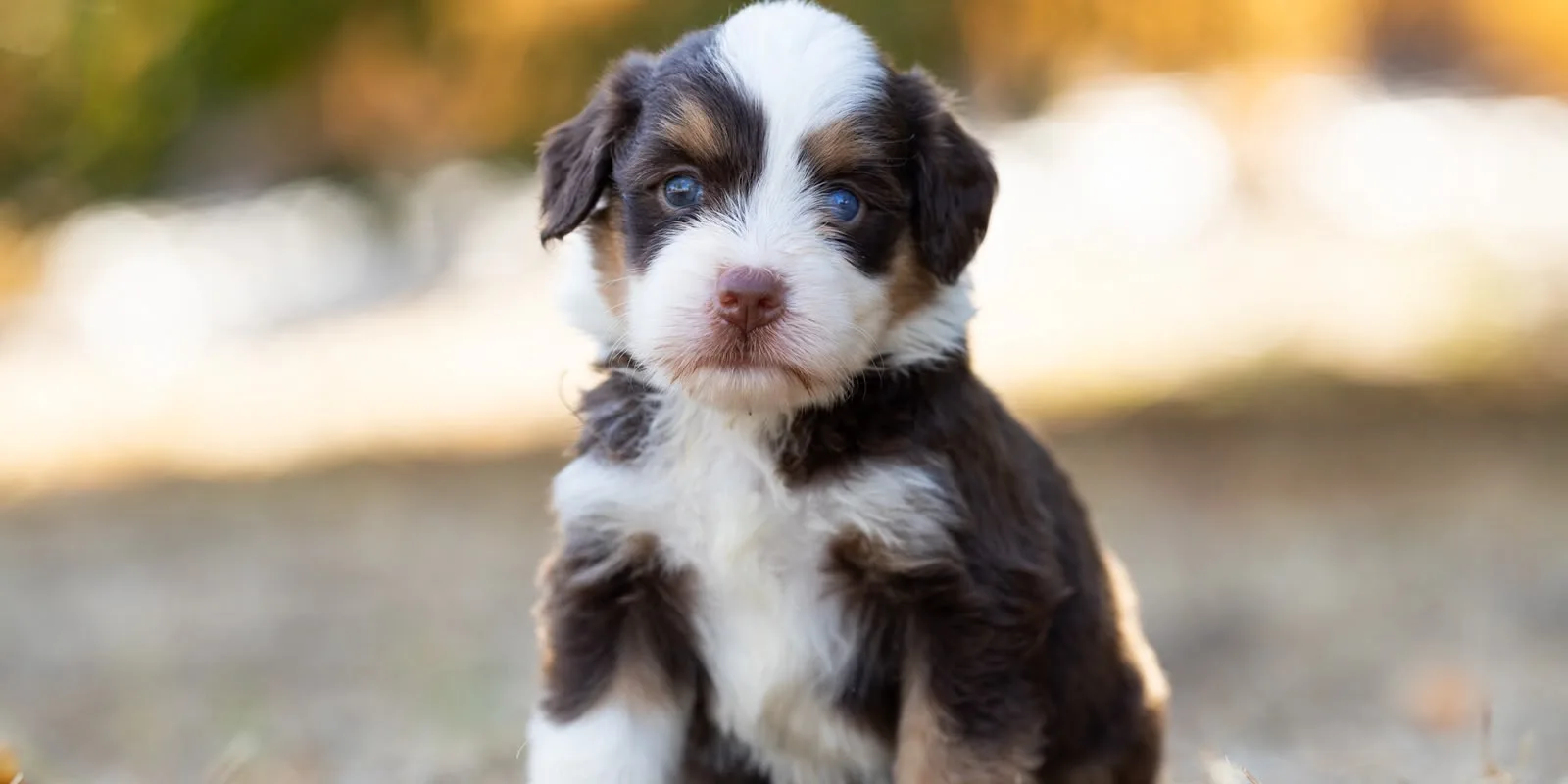
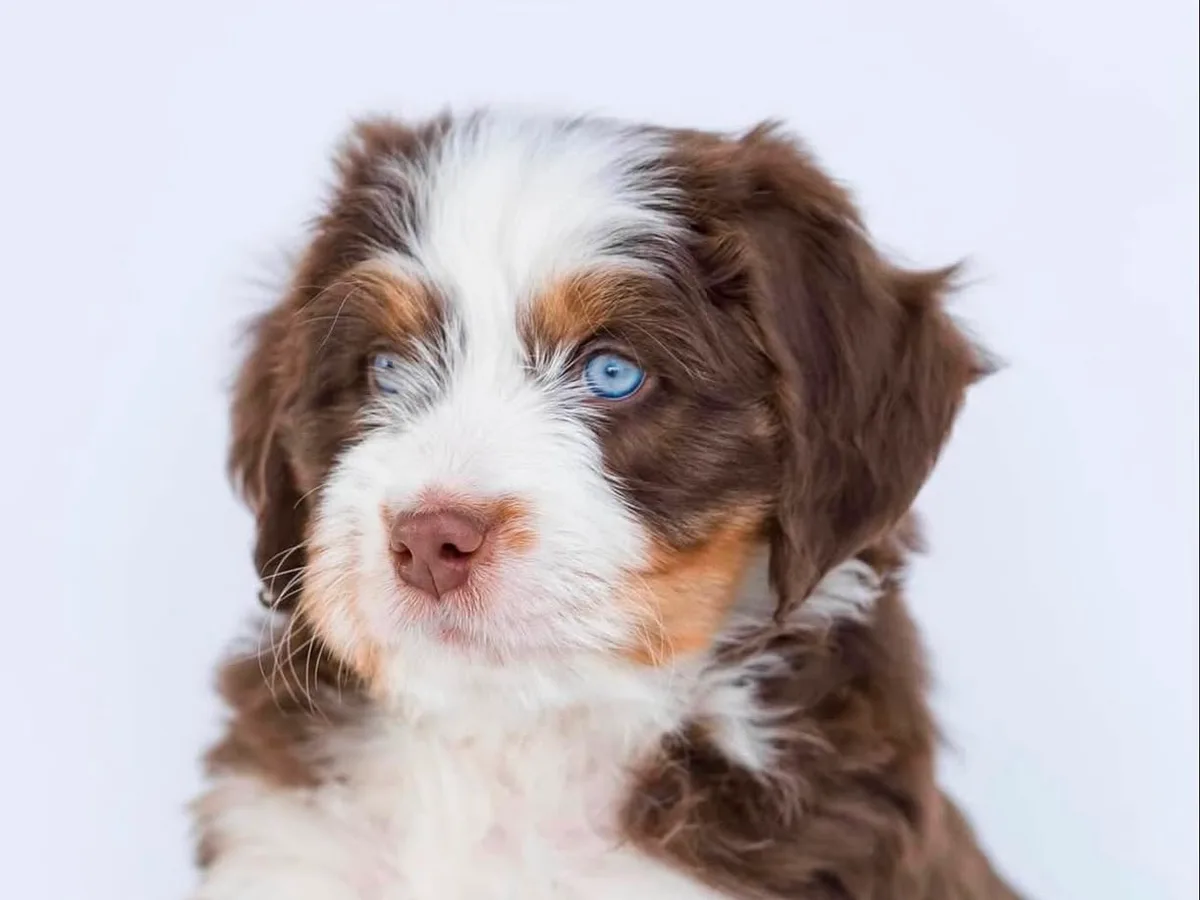
Coats run from black tricolour to chocolate tricolour, by way of red and white, merle tricolour, black and white, particolour and phantom.
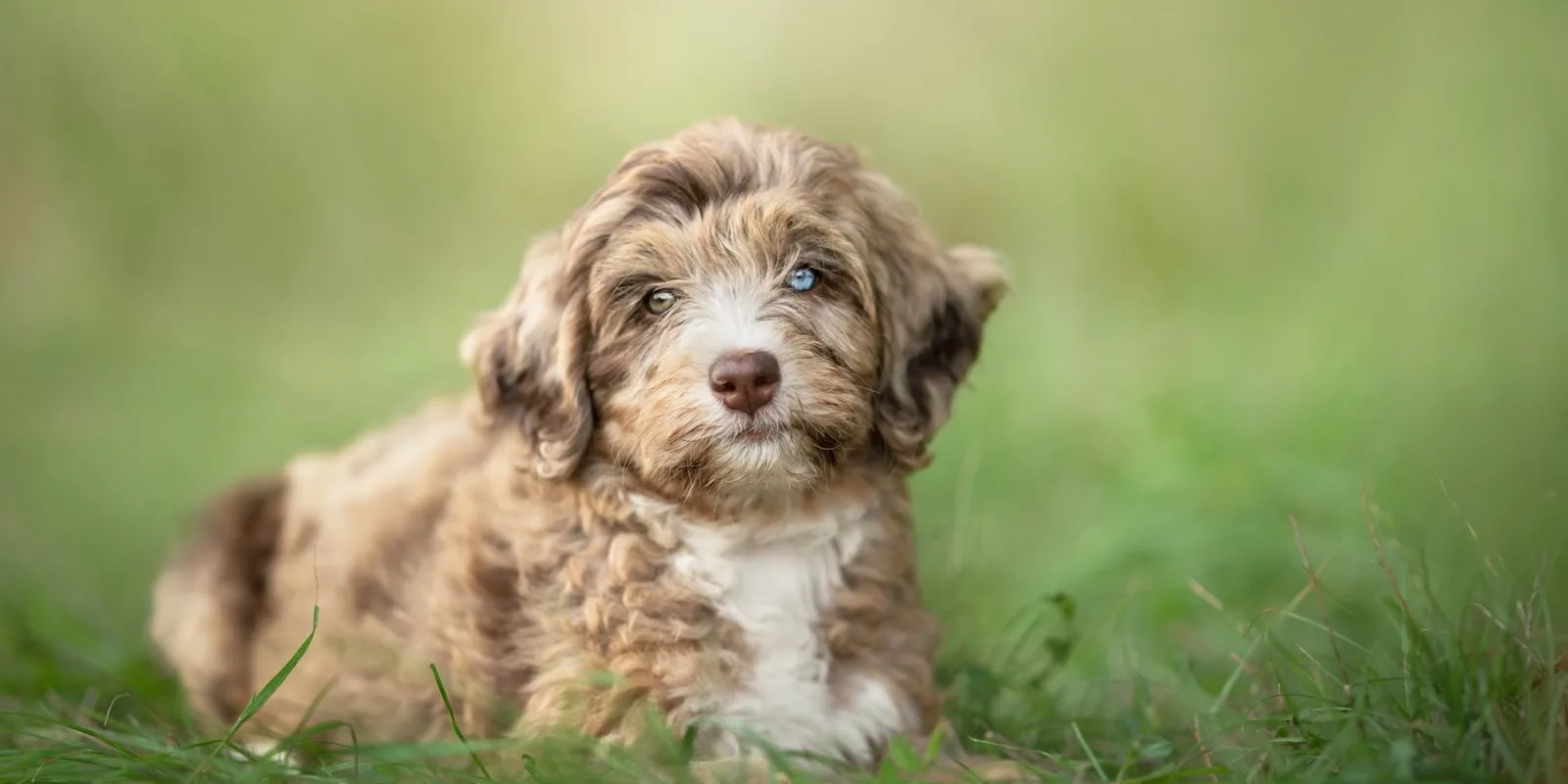
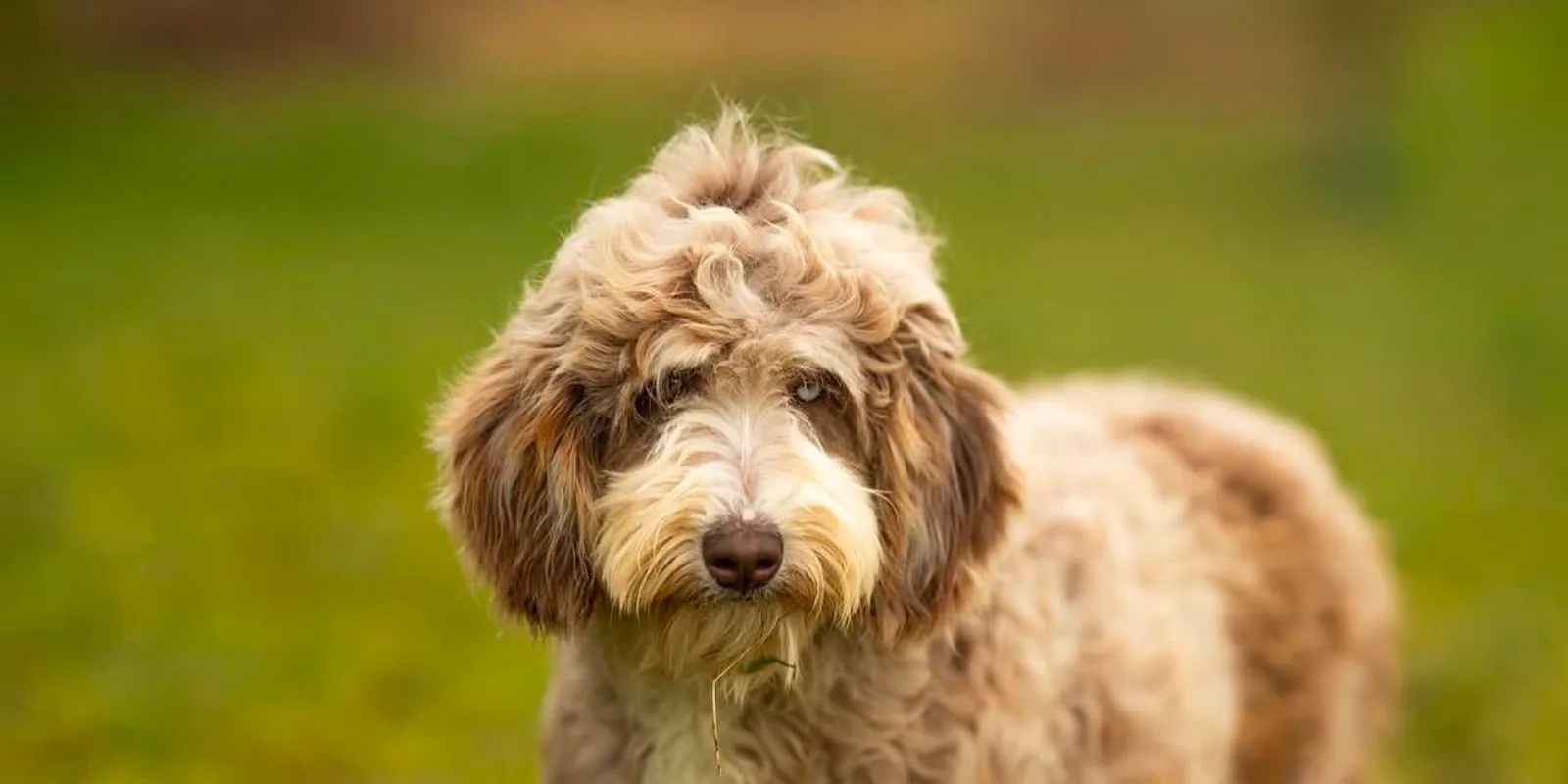
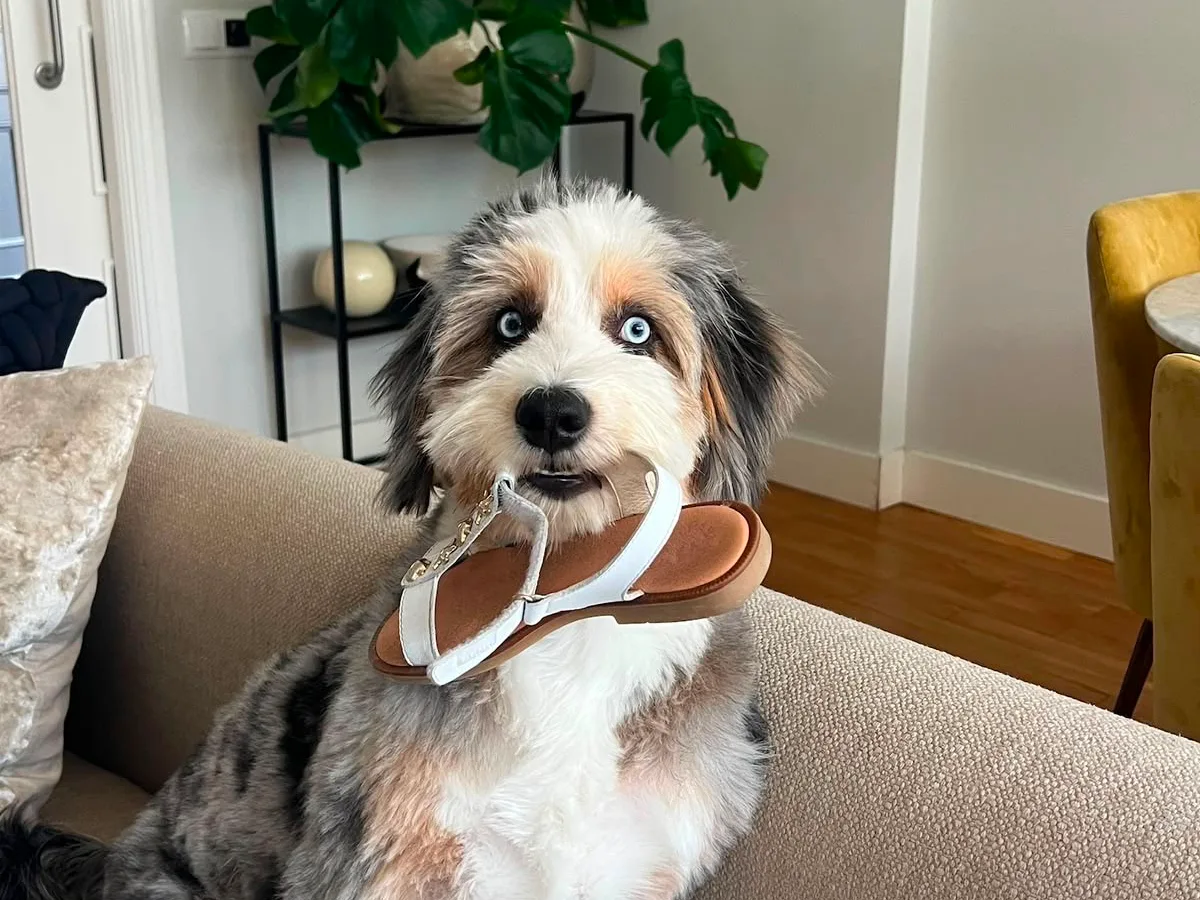
Eyes are brown or blue, and often odd — one of each colour — or particoloured, with two shades in the same iris. It is one of the signatures of the Australian Mountain Doodle, inherited from the Australian Shepherd.
The coat depends on the genes the puppy receives: it can be straight, wavy or curly. None of those textures is guaranteed by the cross, and it only really reads once the puppy coat has gone.
Character and temperament
Easy-going
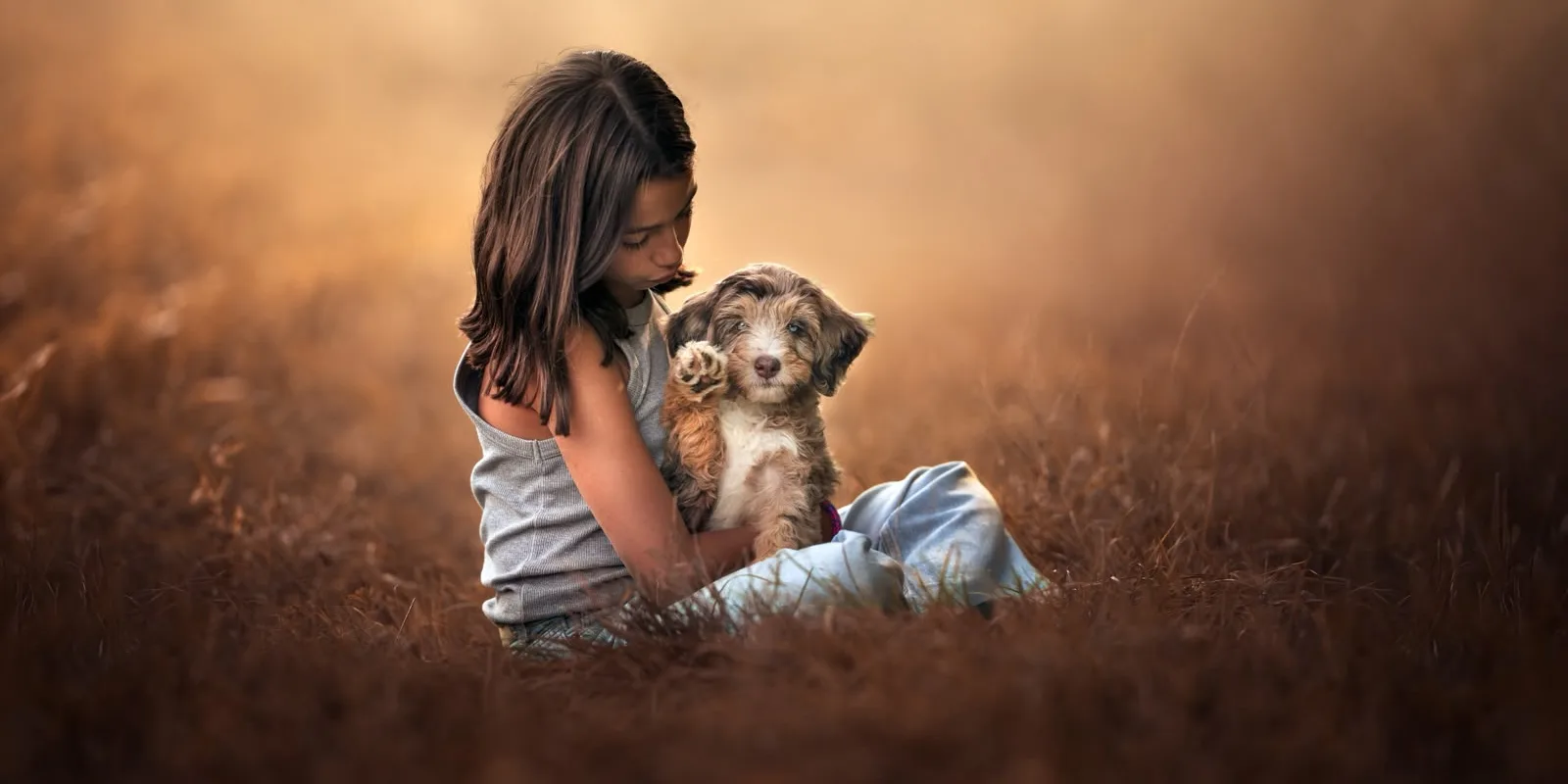
It is the first thing people who breed them say: a dog that falls in with the household rhythm without making a fuss of it. Deeply attached to its family, gentle with children, and showing no marked wariness towards strangers.
Adventurous
The Australian Shepherd leaves it a taste for going out, walking far and finding things out. It picks things up quickly, which makes training a pleasure — and also makes bad habits easy to install if nothing is set out from the first weeks.
What it asks for
Company, and outings. It copes badly with long days alone, and being left on its own is something to build up gradually, from the day the puppy arrives.
Adult weight
Size depends on both parents, and it varies from one puppy to the next within a single litter. The figures below are indicative.
Usual weight
15–25 kg
Most adults land in this range: sturdy enough to keep up on a long walk, without the bulk of a Bernese Mountain Dog.
Mini
Mini lines sit somewhat below that range. Adult weight is estimated litter by litter, from the two parents.
The coat and its upkeep
This is the part not to underestimate: a doodle coat takes time every week, and a regular grooming budget.
Grooming
It all depends on the coat the dog inherits. A wavy or curly coat grows continuously: brush it thoroughly two to three times a week, and daily while the puppy coat changes (roughly between 8 and 14 months), when mats form very quickly, with a professional groom every two to three months. A straight coat takes less grooming, but leaves more hair behind.
Ears and eyes
Drop ears with hair inside them: check and clean them regularly. The groomer plucks the hair inside the ear canal. Keep the hair clear of the eyes so it does not irritate the cornea.
Exercise
Count on a good hour of activity a day, split into several outings: walking, play, training. This is a dog that enjoys hiking and learns fast; mental work matters as much as physical exercise.
Feeding and health checks
A ration suited to the expected adult size, keeping an eye on the growth curve. Frequent veterinary visits during the first year, then an annual check-up.
No dog is hypoallergenic, and the Australian Mountain Doodle is no exception. Because coat texture is not fixed — it can be straight as easily as curly — how much a dog sheds varies from one to the next, within a single litter included. So we promise nothing on that front: if allergies are your concern, meet the parents and spend time with them before deciding.
Who is the Australian Mountain Doodle for?
- Families: a tolerant dog that copes well with a busy house — provided the children also learn to leave it alone.
- People who go out every day: around an hour of activity daily, in any weather. A garden is no substitute for walks.
- People who accept the grooming: brushing several times a week and a groomer every two to three months, for the whole of the dog's life.
- People who are often at home: remote work, flexible hours or family support. This is not a dog for ten-hour absences.
- Less suitable: if you want an independent dog, a coat that needs no upkeep, or a colour and an adult size guaranteed in advance.