Intelligence and learning
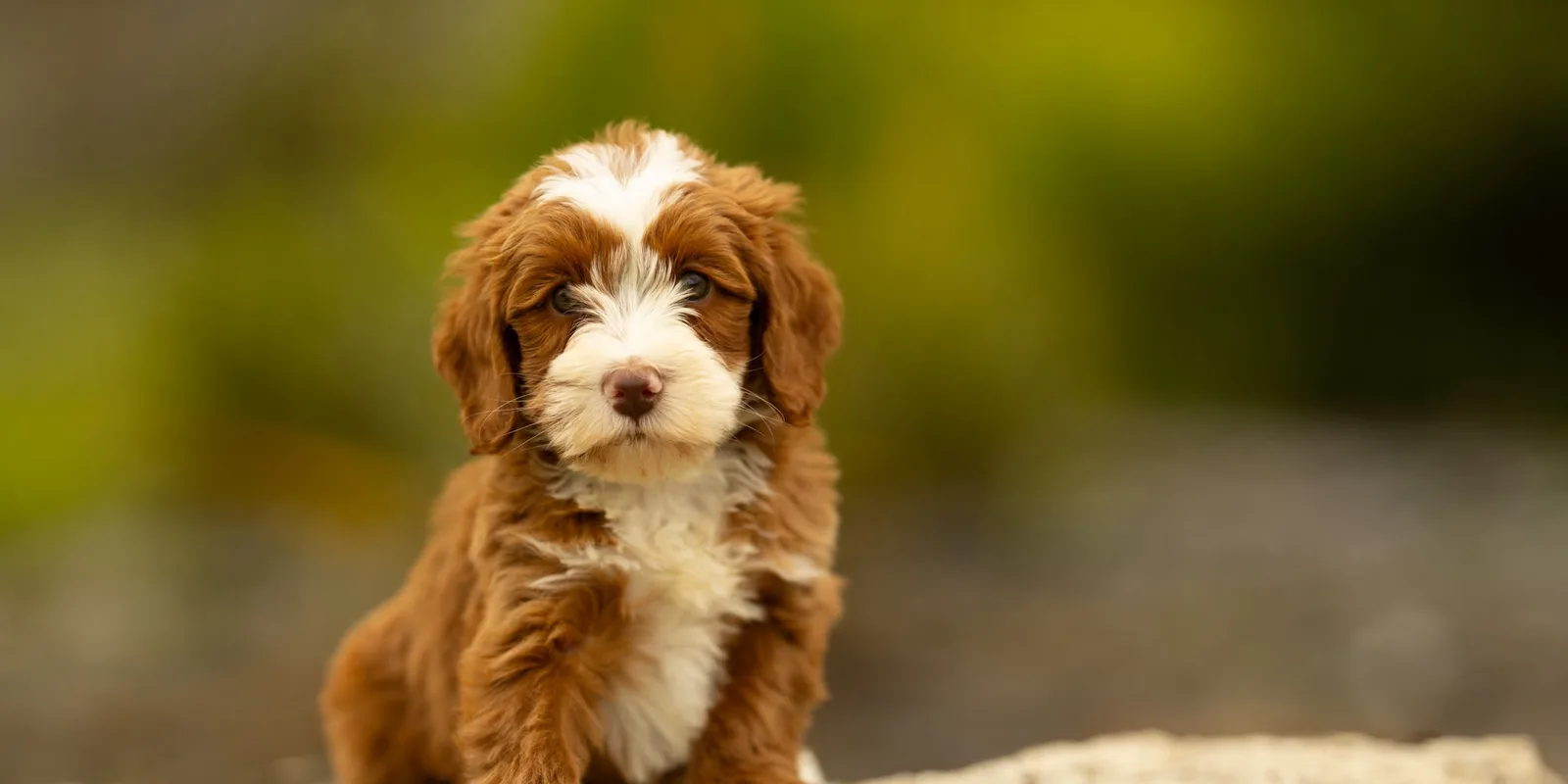
Thanks to the intelligence inherited from the Labrador and the Poodle, they excel at agility, obedience, tracking and therapy work. Even people new to dog training find them easy to teach.
At Ouidoodle we breed Australian Labradoodles exclusively — not standard Labradoodles. The distinction matters: where a Labradoodle is often a first-generation cross, the Australian Labradoodle comes from multigenerational selective breeding carried out since the 1980s, which gives a far more consistent coat from one litter to the next, a balanced temperament and genetically tested breeding dogs.
1A coat that does not shed
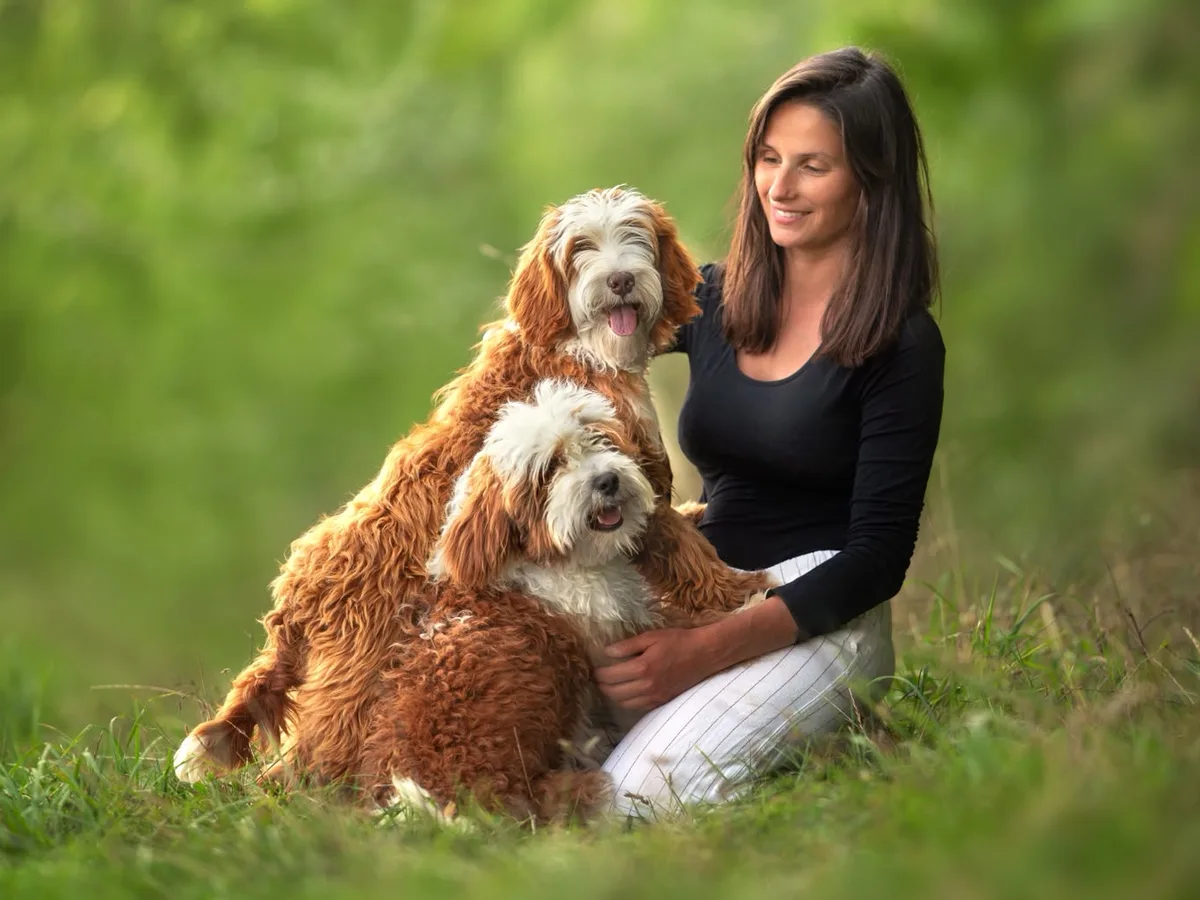
Unlike a first-generation cross, multigenerational selection fixes a fleece (soft and wavy) or wool (dense and curly) coat that does not shed. Many people with allergies tolerate it well, but no dog is entirely free of the risk of a reaction: we encourage you to meet our dogs before making up your mind.
2A gentle, stable temperament
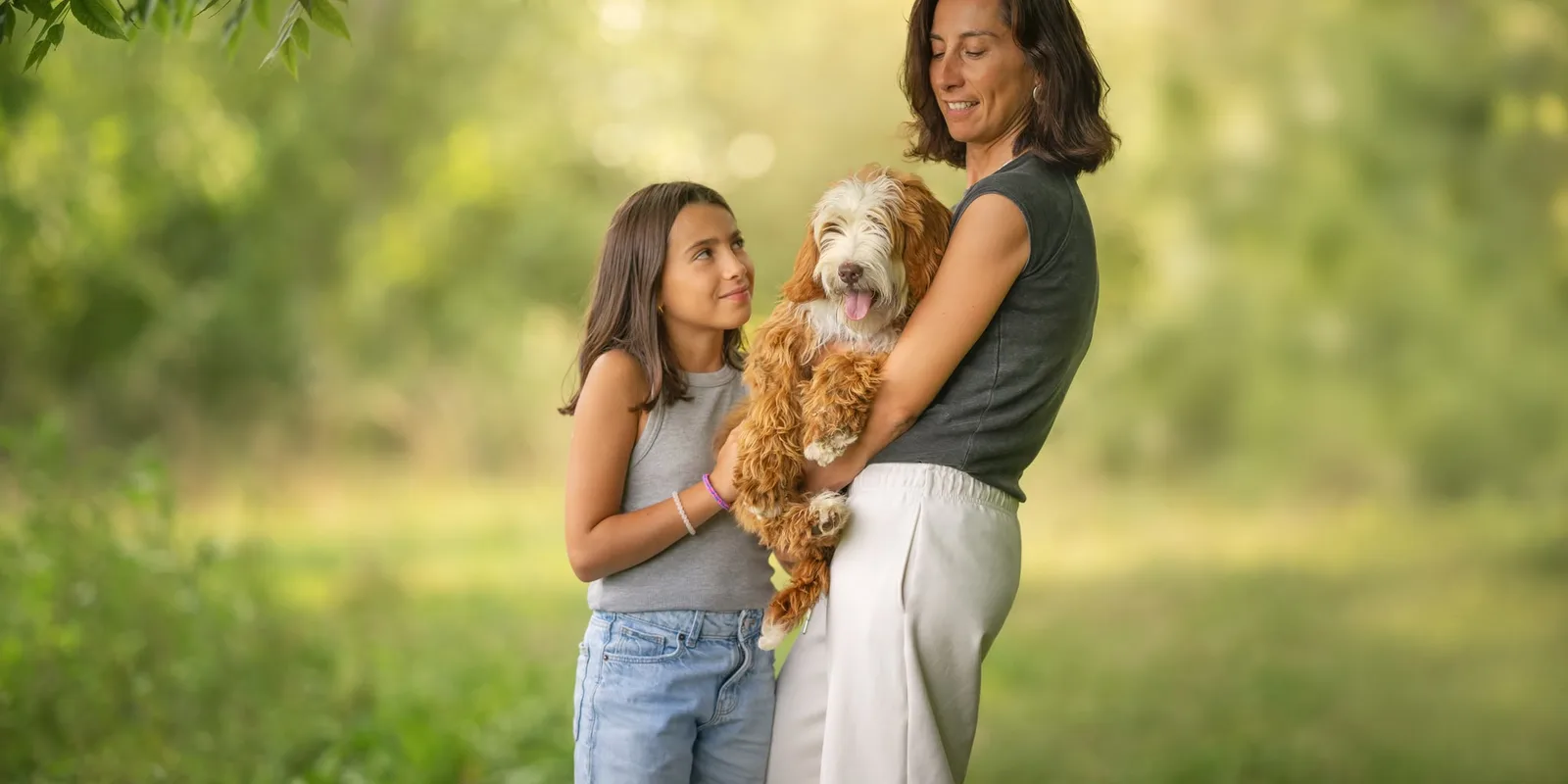
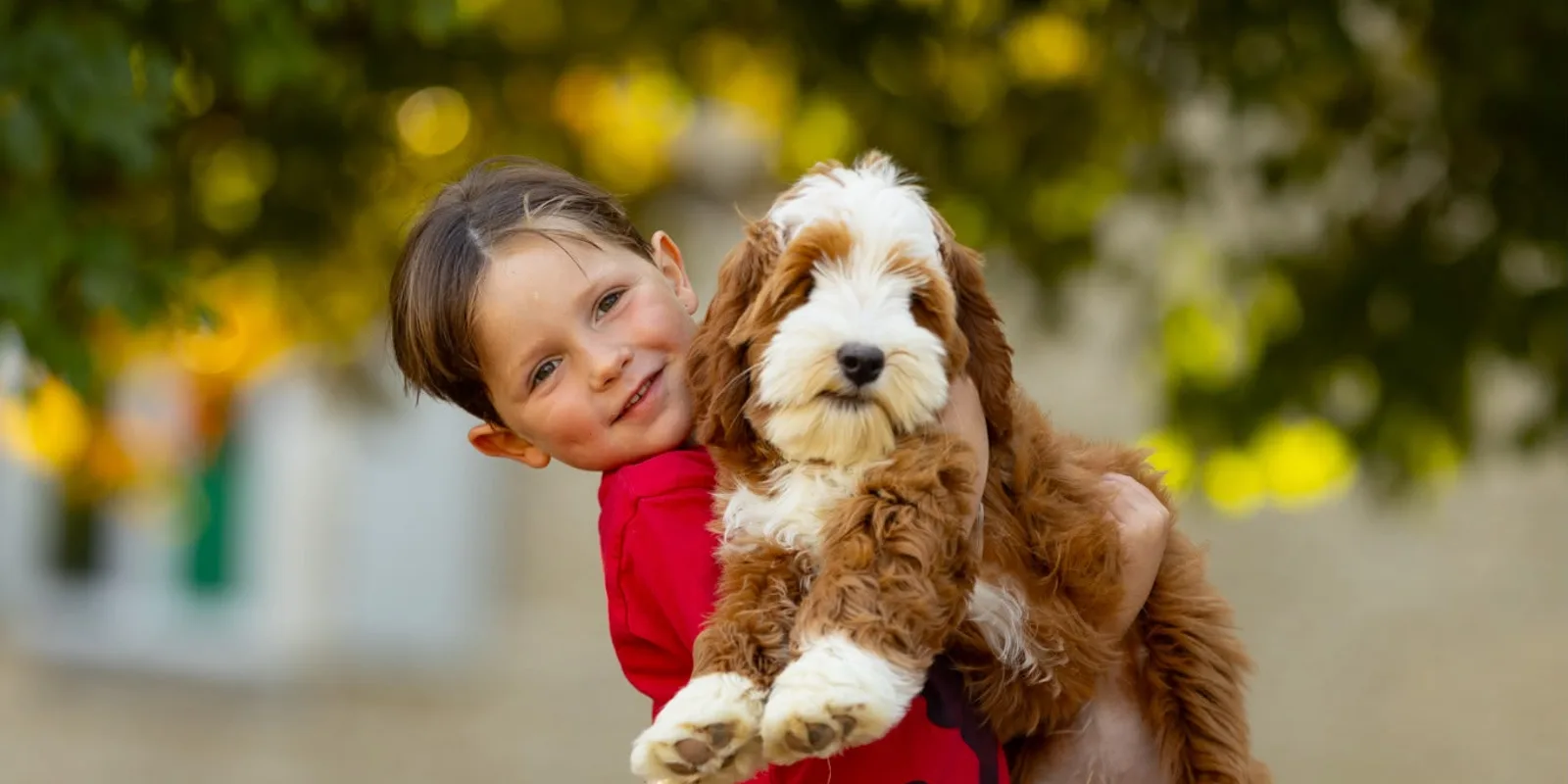
Gentleness and sociability have been sought in the breed from the very start. The Australian Labradoodle suits families with children as well as older people, and lends itself well to therapy work.
3Verified health
All of our breeding dogs are genetically tested. You receive the parents’ test results along with your puppy.
4Intensive socialisation
8 weeks of the Puppy Culture protocol: gradual exposure to sounds, people, animals and objects. A puppy that settles in quickly.
5Lifetime support
You are never on your own after the adoption: we stay available for any question about health, feeding or training.
The Australian Labradoodle is a hybrid breed created in Australia in the 1980s. This cross between the Labrador Retriever and the Poodle answered a very specific need: providing an assistance dog for people with allergies. Over time, other breeds such as the English and American Cocker Spaniel were introduced to refine its physical and behavioural traits.
There is nothing accidental about the mix: here is what each breed contributed:
Although the Australian Labradoodle is not officially recognised as a purebred by every kennel federation, it follows a rigorous breeding programme, overseen by associations such as the ALAA (Australian Labradoodle Association of America), which works to preserve the breed standard and its genetic quality. Australian Labradoodles now have a pedigree in the United States.
Sizes are defined by measuring the height at the withers — that is, from the ground to the highest point of the shoulder blades.
35–42 cm · 7–13 kg
43–52 cm · 13–20 kg
53–65 cm · 20–30 kg
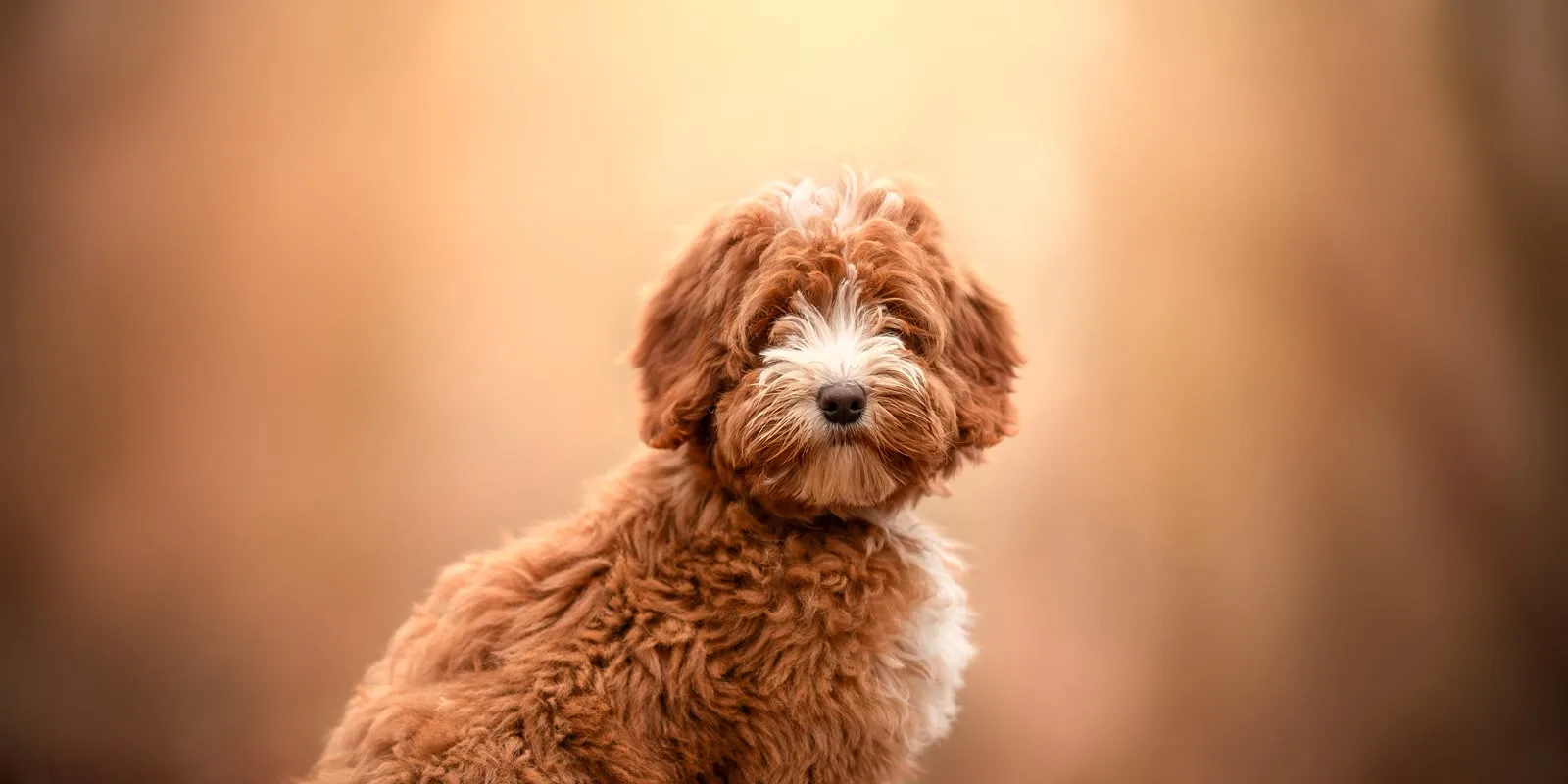
A clear red coat, with or without white. With white markings on the chest and legs, it becomes a "Red Tuxedo".
A lighter red, again with or without white markings.
A darker shade of red. With white markings, it is known as a "Caramel Tuxedo".
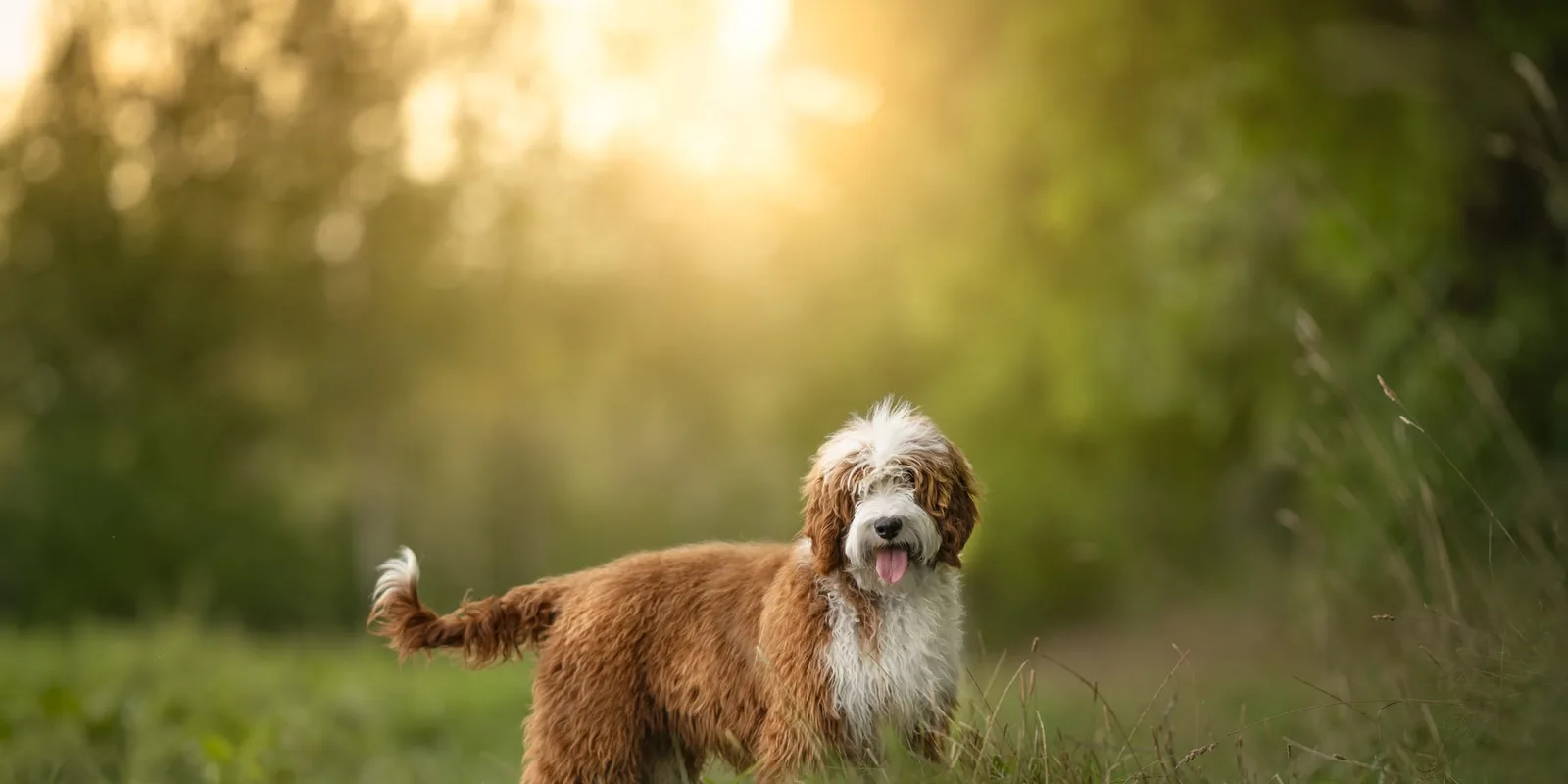
A coat with broad coloured patches on white, the white covering at least half of the dog.
The Australian Labradoodle also comes in solid colours: black, white or chocolate, with or without white markings.
A dark base (black or chocolate) with lighter markings on the face, legs and chest.
Thanks to the intelligence inherited from the Labrador and the Poodle, they excel at agility, obedience, tracking and therapy work. Even people new to dog training find them easy to teach.
Highly sociable, they love human company and get on well with other animals. Patient and playful with children; curious but rarely aggressive with strangers.
Calm once settled indoors, they need 1 to 2 hours of exercise a day: ball games, forest walks, swimming and agility courses.
We use cookies to understand how this site is used and to measure our campaigns. Nothing is measured without your agreement. Privacy policy
Your choices
Needed for the site to work and to remember this very choice. Always active.
Which pages are read, and how visitors arrive. Never used to identify anyone.
Lets us know which advertisement led you here, and avoid showing it to you again.
Remembers your preferences, such as the language you chose.